Trauma from "A Class Divided"
One day of trauma for white kids vs. a lifetime of trauma for others

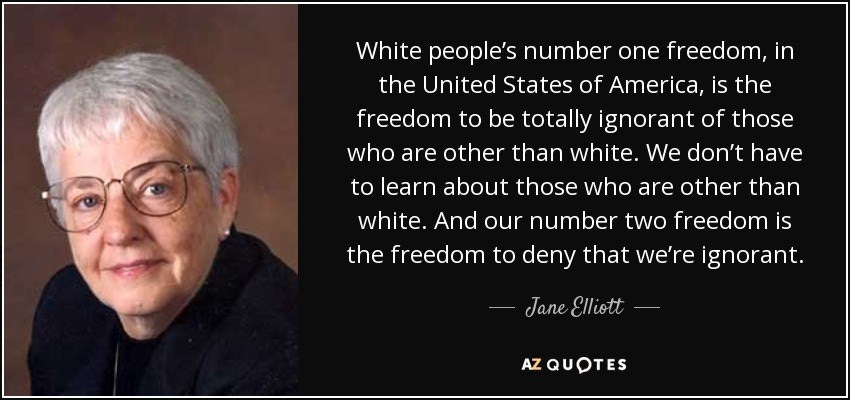
Welcome to this series of articles where I explore how I, as a white person, learn about racism and about my own blind spots when it comes to my own racism.
Recently, I ran across a Frontline video called A Class Divided. The title seemed familiar, but I couldn't place it. It is a little less than an hour-long, and Frontline usually has compelling stories to tell, so I hit the play button.
Shortly into the video, it occurred to me that I knew the story but had never seen this version of it. A Class Divided is the story of Jane Elliott, a third-grade teacher, who ran an exercise about racism in her classroom. The video also documents the reunion of her students from that experience 14 years later.
Jane Elliott ran the exercise over two days and divided the class into two groups. One group is the "brown-eyed" group, and the other is the "blue-eyed" group. All of the children are white, and remember, they are third-graders too, so relatively young. On day one, the brown-eyed kids were given collars to wear, signifying that they are brown-eyed and therefore of lesser status. The blue-eyed kids, who didn't wear collars, were told that they are better than brown-eyed kids, have extra privileges, and are smarter. This unequal treatment between the brown-eyed kids being discriminated against and the blue-eyed kids being privileged went on for the entire day. On the second day, the kids switched roles. The blue-eyed kids were discriminated against, and the brown-eyed kids became the privileged group.
My heart ached for those kids who were being discriminated against. Whether it was the blue-eyed kids or the brown-eyed kids, I could see how hurt they were when they didn't have the same privileges and the other group of kids. Beyond privileges, the discrimination extended to how smart or not smart one group was compared to the other. It was humiliating and degrading for the kids, and I could see it in their faces. I wondered if this exercise would traumatize the kids and harm them.
As it turns out, fourteen years later, as adults, the kids weren't traumatized at all. They commented that they hated the experience but agreed that "the learning was worth the agony." Still, I thought about how difficult the exercise must have been for those little kids. I felt that if a public school teacher did an activity like that today, there would be such outrage, the school would probably shut it down.
I emailed a friend about the video and commented about how traumatized those kids must have been. Something didn't feel right about the email. I reworded it, and it was better, but something was still off. I sent the email and want for a walk. Not more than 100 yards from home, I realized what I had done. I was having all this compassion for those kids in the video who were traumatized for a day. A group of white kids, I will remind you. My blind spot was that my friend I sent the email to, and his brothers, sisters, and other family members, suffered that trauma, and worse, ALL OF THEIR LIVES. Not just for a day.
Thankfully, my friend, his name is Dominique, and I have connections that run deeper than one misfired email. There is also something about him that allows him to connect with all different types of people. I am grateful that I am one of those people. You have probably guessed by now that my friend is black. I sent Dom a follow-up email admitting to my nearsightedness and not seeing the bigger picture of the trauma that happens to people of color every day, for a lifetime. He gave me credit for catching my mistake, and he shared his favorite Jane Elliott video with me. You can watch it here:
If you are interested in the full Frontline video from 1985, take a look here on PBS.
Thank you for being here and for joining me on this journey.
Martin